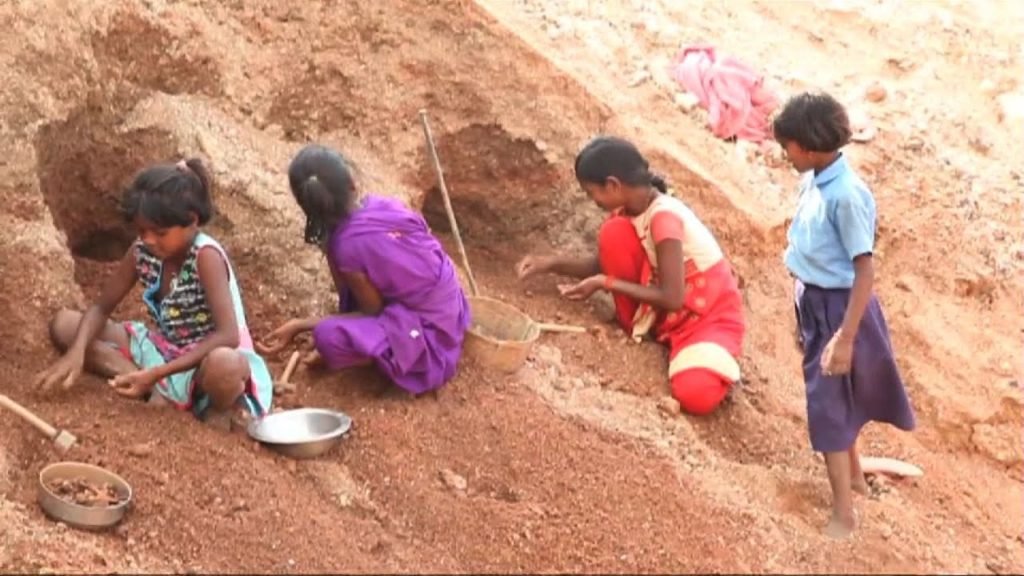
"Makeup Industry destroying many small lives"
Child labour is a violation of fundamental human rights and has been shown to hinder children’s development, potentially leading to lifelong physical or psychological damage. Evidence points to a strong link between household poverty and child labour, and child labour perpetuates poverty across generations by keeping the children of the poor out of school and limiting their prospects for upward social mobility. This lowering of human capital has been linked to slow economic growth and social development.
Child Labour in Bangladesh
Child labour in Bangladesh is common, with 4.8 million or 12.6% of youngsters aged 5 to 14 within the manpower .Out of the kid labourers engaged within the manpower , 83% are employed in rural areas and 17% are employed in urban areas.Child labour are often found in agriculture, poultry breeding, fish processing, the garment sector and therefore the leather industry, also as in shoe production. Children are involved in jute processing, the assembly of candles, soap and furniture. They add the salt industry, the assembly of asbestos, bitumen, tiles and ship breaking.Poverty is widely recognised and acknowledged because the primary explanation for child labour.The link between poverty and child labour is supported by efforts of international organizations, like the ILO and therefore the United Nations , to scale back child labour through poverty reduction policies.There’s a robust indirect correlation between the income level of a rustic and therefore the incidence rate of kid labour. A rise of $0–$500 per capita income to $500–$1000 per capita income can cause a decrease in child labour incidence rate from 30%–60% to 10%–30%.Although the annual per capita income of Bangladesh has been increasing, around 9–13% of the entire labour force in Bangladesh still consists of youngsters aged 5–14.During a 2013 statistical report, UNICEF estimates that around 43.3% of the population in Bangladesh is currently living below the international poverty level .